The test named the "SARS-CoV-2 DETECTR" is easy to implement and to interpret, and requires no specialised equipment, said researchers from the University of California, San Francisco in the US.
The vaccine was well tolerated in all dose groups with no vaccine-related adverse events.
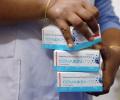
Bharat Biotech's Covaxin has demonstrated 77.8 per cent effectiveness against symptomatic COVID-19 and 65.2 per cent protection against the new Delta variant.

Twenty-two cases of COVID-19 sub-variant JN.1 have been detected in the country till Thursday, with 21 cases being reported from Goa and another from Kerala, official sources said.
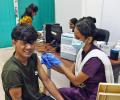
Easy access to this kind of test could help people determine what kind of precautions they should take against COVID-19 infection, such as getting an additional booster shot, the researchers said.

Bharat Biotech on Wednesday said a study has demonstrated that a booster dose of Covaxin has a neutralising effect on the Omicron and Delta variants of COVID-19.
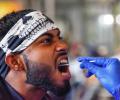
The genomic consortium, citing global data, said there is now clear experimental and clinical data supporting very high immune escape potential of Omicron, which appears to be the major component of its growth advantage over Delta.

Children who previously had COVID-19 or the inflammatory condition MIS-C are not protected against the Omicron variant of coronavirus, according to a study which found vaccination, however, does afford protection.
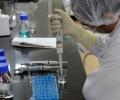
COVID-19 may be a seasonal infection linked to low temperatures and humidity, much like seasonal influenza, according to new 'robust' evidence found by researchers.

They have named this unique cluster of virus population as 'Clade A3i' found in 41 per cent of the genome sequenced in India.
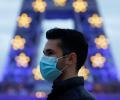
The B.1.640.2 variant has been reported by researchers at institute IHU Mediterranee Infection in at least 12 cases, and has been linked to travel to African country Cameroon.
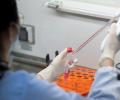
The United States intelligence community has failed to reach any firm conclusion on the exact origin of COVID-19 and is split on whether it leaked from a lab in China or emerged in nature, even though it does not believe the virus was developed as a biological weapon, according to results of a detailed review ordered by President Joe Biden.
George said this was detected months ago in Indian passengers who were screened at Singapore Airport.

As of now, Gennova Biopharmaceuticals has launched a vaccine, Gemcovac-OM, which is based on the Omicron variant.

In its weekly bulletin of December 27, released on Monday, the Indian SARS-CoV-2 Genomics Consortium (INSACOG) said global outbreaks of SARS-CoV-2 are increasingly shifting from Delta to Omicron.

'It is admitted that the AZ vaccine can, in very rare cases, cause TTS.'

'I can say with confidence that any future SARS-CoV-2 vaccine, developed anywhere in the world, would have to be manufactured in India, if it is to be affordable and of high quality.'
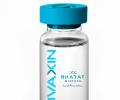
The vaccine induced robust binding and neutralising antibody responses which were comparable to those observed in the convalescent serum collected from patients who had recovered from COVID-19, according to the findings which have appeared on medRxiv, a preprint server.

Omicron can evade the immune protection conferred by COVID-19 vaccines and natural infection, according to a peer-reviewed study which also suggests that the new variant of coronavirus is completely resistant to antibody therapies in use today.
'Delta continues to be the dominant lineage for new cases across all parts of India in recent samples and remains the most rapidly rising lineage globally that is responsible for multiple outbreaks, including across Southeast Asia, which shows the fastest growth in new cases globally,' the INSACOG said.
Scientists at the CSIR-Centre for Cellular and Molecular Biology in Hyderabad have found prominently a different variant of SARS-CoV-2 in southern parts of India, a top official of the institute said on Thursday.

Covaxin, a whole-virion inactivated SARS-CoV-2 vaccine used for mass immunization in the country, showed a 65.2 per cent protection against the Delta variant in a double-blind, randomized, multicentre, phase 3 clinical trial.
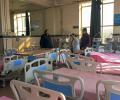
Several states have been reporting an uptick in the number of COVID cases over the last few weeks and nine states and Union territories have so far detected the presence of the JN.1 sub-variant of the virus.
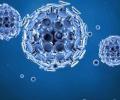
The team led by researchers at the University of Maryland in the United States found that people infected with SARS-CoV-2 exhale infectious virus in their breath, and those infected with the Alpha variant put 43 to 100 times more virus into the air than people infected with the original strains of the virus.

Three new categories -- all asymptomatic healthcare workers working in non-COVID hospitals/areas of COVID hospitals/blocks, asymptomatic frontline workers such as surveillance workers deployed in containment zones and paramilitary/police personnel involved in COVID-19 related activities -- have now been included.
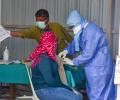
"We not only uncovered that these stem cell-derived heart cells are susceptible to infection by novel coronavirus, but that the virus can also quickly divide within the heart muscle cells," said study co-author Arun Sharma from the Cedars-Sinai Board of Governors Regenerative Medicine Institute in the United States. "Even more significant, the infected heart cells showed changes in their ability to beat after 72 hours of infection," Sharma said.

A new variant of SARS-CoV-2, the virus which cause COVID-19, has been detected in South Africa and many other countries globally which could be more transmissible and evade protection provided by vaccines, according to study.
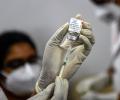
The NIH said results of two studies of blood serum from people who had received Covaxin suggest that the vaccine generates antibodies that effectively neutralise the B.1.1.7 (Alpha) and B.1.617 (Delta) variants of SARS-CoV-2, first identified in the United Kingdom and India, respectively.
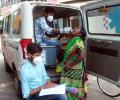
The highly transmissible Delta variant of SARS-CoV-2 has mutated further to form the 'Delta plus' or 'AY.1' variant but there is no immediate cause for concern in India as its incidence in the country is still low, scientists in New Delhi said.
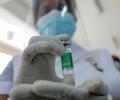
Anurag Agrawal, the Director of the Institute of Genomics and Integrative Biology, said the study on effectiveness of the available vaccines on the B.1.617 variant of SARS-CoV2 suggests that post vaccination, the infections are milder.
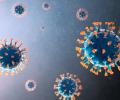
The Delta Plus variant have been detected sporadically in Maharashtra, Kerala and MP.
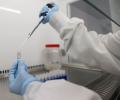
The researchers from the the University of Texas Health Science Center at San Antonio (UT Health San Antonio) in the United States said by enabling this modification, nsp10 protects the virus from host cell immune response.
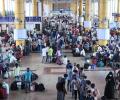
The endemic stage is when a population learns to live with a virus. It is very different from the epidemic stage when the virus overwhelms a population.
Instead of killing bat cells as the virus does with human cells, the MERS coronavirus enters a long-term relationship with the host, maintained by the bat's unique 'super' immune system

COVID-19 sub-variant JN.1 has spread to 15 states and Union territories with a total of 923 cases of the infection reported so far, according to the Indian SARS-CoV-2 Genomics Consortium (INSACOG).
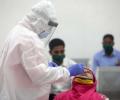
The first nasal vaccine against COVID-19, developed by Bharat Biotech, has received regulator's nod for conducting phase 2 clinical trials, the Department of Biotechnology said on Friday.

But no extra risk after second dose, shows study led and funded by drug maker, reports Sohini Das.

The arrival of summer in India may have raised hopes that hot and humid weather could slow the COVID-19 progression but virologist Naga Suresh Veerapu believes that outbreak and pandemic occurrences often do not follow seasonality.
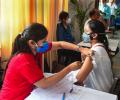
Researchers at Public Health Scotland and the University of Edinburgh, UK, found that the Pfizer-BioNTech vaccine offered better protection against the Delta variant compared to the Oxford-AstraZeneca preventive, known as Covishield in India.

Human Metapneumovirus (HMPV) is a respiratory virus that causes illnesses ranging from mild respiratory discomfort to severe complications. It spreads through respiratory droplets, similar to other respiratory viruses such as RSV and influenza. This article provides an overview of HMPV including its symptoms, transmission, prevention, diagnosis, treatment, and how it differs from COVID-19.
 © 2026 Rediff.com - Advertise with us - Disclaimer - Privacy Policy - Sitemap - Feedback - About us - Terms of use - Grievances